
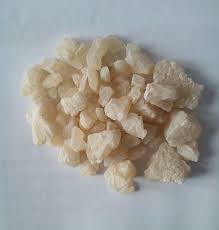
Description
Cathinone
The landscape of Novel Psychoactive Substances (NPS) changes rapidly, often introducing structural modifications to existing compounds to navigate regulatory frameworks. One such compound that has drawn the attention of forensic chemists, toxicology laboratories, and public health agencies is 4-MDMC. Cathinone
This article provides an objective breakdown of 4-MDMC, its chemical classification, its relationship to more widely known stimulants like mephedrone, and its current status in global drug monitoring systems.
What is 4-MDMC? | Cathinones
Also, 4-MDMC stands for 4-Methyl-N,N-dimethylcathinone (also referred to in scientific literature as 4-methylmetamfepramone). It belongs to the synthetic cathinone class, which is a subcategory of amphetamine-type stimulants derived from the naturally occurring psychoactive alkaloids found in the khat plant (Catha edulis).
Forensic analyses indicate that 4-MDMC is a structural analog of 4-MMC (mephedrone) and metamfepramone. In the body, 4-MDMC widely characterized by toxicologists as a suspected prodrug of mephedrone, meaning that once ingested, metabolic processes strip a portion of its molecular structure away, converting it into active mephedrone. cathinone drugs
Forensic Note: Synthetic cathinones like 4-MDMC are frequently mislabeled or found as adulterants in illicit drug markets, sold under the guise of other materials such as MDMA (“Molly”) or older-generation cathinones like 3-MMC and 4-MMC.
Chemical Profile and Identifiers | Cathinone Drugs
Understanding the structural composition of 4-MDMC requires looking at its molecular formula and forensic identifiers. The compound is distinguished by its specific arrangement of methyl and dimethyl groups attached to the core cathinone backbone.
| Attribute | Technical Specification |
| Systematic (IUPAC) Name | 2-(dimethylamino)-1-(4-methylphenyl)propan-1-one |
| Molecular Formula | $C_{12}H_{17}NO$ |
| Molar Mass | 191.27 g/mol |
| CAS Number | 1157738-08-3 |
| PubChem CID | 43794768 |
| Substance Class | Substituted Cathinone / Synthetic Stimulant |
Pharmacology and Mechanism of Action 4-MDMC
Because 4-MDMC is classified as a Novel Psychoactive Substance, comprehensive clinical data involving human trials are nonexistent. Most data regarding its pharmacology extrapolated from animal models or derived from its metabolic relationship to mephedrone.
1. Monoamine Reuptake Inhibition
Like other synthetic cathinones, 4-MDMC acts on the central nervous system by interacting with monoamine transporters. It alters the normal functioning of:
-
Dopamine Transporters (DAT)
-
Serotonin Transporters (SERT)
-
Norepinephrine Transporters (NET)
By blocking the reuptake of these neurotransmitters or triggering their release into the synaptic cleft, the compound induces acute stimulant effects.
2. Metabolic Conversion (The Prodrug Theory)
The primary distinction between 4-MDMC and mephedrone (4-MMC) lies in the amine group. Mephedrone possesses a monomethyl group, whereas 4-MDMC possesses a dimethyl group. During metabolism, N-demethylation occurs, transforming a significant portion of 4-MDMC into mephedrone within the consumer’s system. This metabolic pathway mirrors how codeine converts into morphine, or how GBL converts into GHB. cathinone drugs
Risks, Adverse Side Effects, and Toxicity
The scarcity of controlled clinical evaluations means that the exact toxicological threshold of 4-MDMC is undefined, making it inherently unpredictable. However, based on reports from emergency departments and forensic data involving substituted cathinones, several severe acute physiological risks are documented:
-
Cardiovascular Strain: Marked by acute tachycardia (elevated heart rate), severe hypertension (high blood pressure), and peripheral vasoconstriction.
-
Hyperthermia: A dangerous rise in core body temperature caused by altered serotenergic activity, which can precipitate rhabdomyolysis or multi-organ failure if left untreated.
-
Neurological Distress: Manifesting as severe jaw grinding (bruxism), dilated pupils, acute anxiety, paranoia, and severe insomnia.
-
Compulsive Redosing: Cathinone derivatives typically present a steep psychological dependency curve, driven by a rapid drop in synaptic dopamine levels following the initial peak.
Global Regulatory and Legal Status,4-MDMC
So, Governments and international bodies monitor 4-MDMC closely through early warning networks, such as those managed by the United Nations Office on Drugs and Crime (UNODC) and the European Union Drugs Agency (EUDA).
-
United States: While 4-MDMC explicitly listed by name on Schedule I of the Controlled Substances Act, it is frequently treated as a controlled substance under the Federal Analogue Act due to its structural and pharmacological similarity to mephedrone (a Schedule I substance).
-
Europe and International Jurisdictions: Many nations utilize broad catch-all legislation covering the entire chemical architecture of substituted cathinones. Consequently, the manufacture, importation, possession, or sale of 4-MDMC prohibited across the majority of global jurisdictions.</p>
-
Research Limitations: The compound restricted strictly to licensed forensic laboratories and chemical research facilities for reference standard analysis. Cathinone
Reviews
There are no reviews yet.